
Protecting Your Assets in Divorce

Divorce isn’t only an emotional event—it’s also a financial turning point. Even when both partners intend to part on good terms, dividing property, accounts, and investments can be complicated. Understanding how assets are classified, what your state’s laws require, and which preemptive steps to take can help you protect what’s yours and prepare for a confident financial future.
Why Divorce Has Major Financial Implications
Divorce changes nearly every part of your financial life. When a marriage ends, what was once shared—homes, savings, debts, and even future income potential—must be divided. How that division happens depends on your state’s laws, which vary significantly across the country.
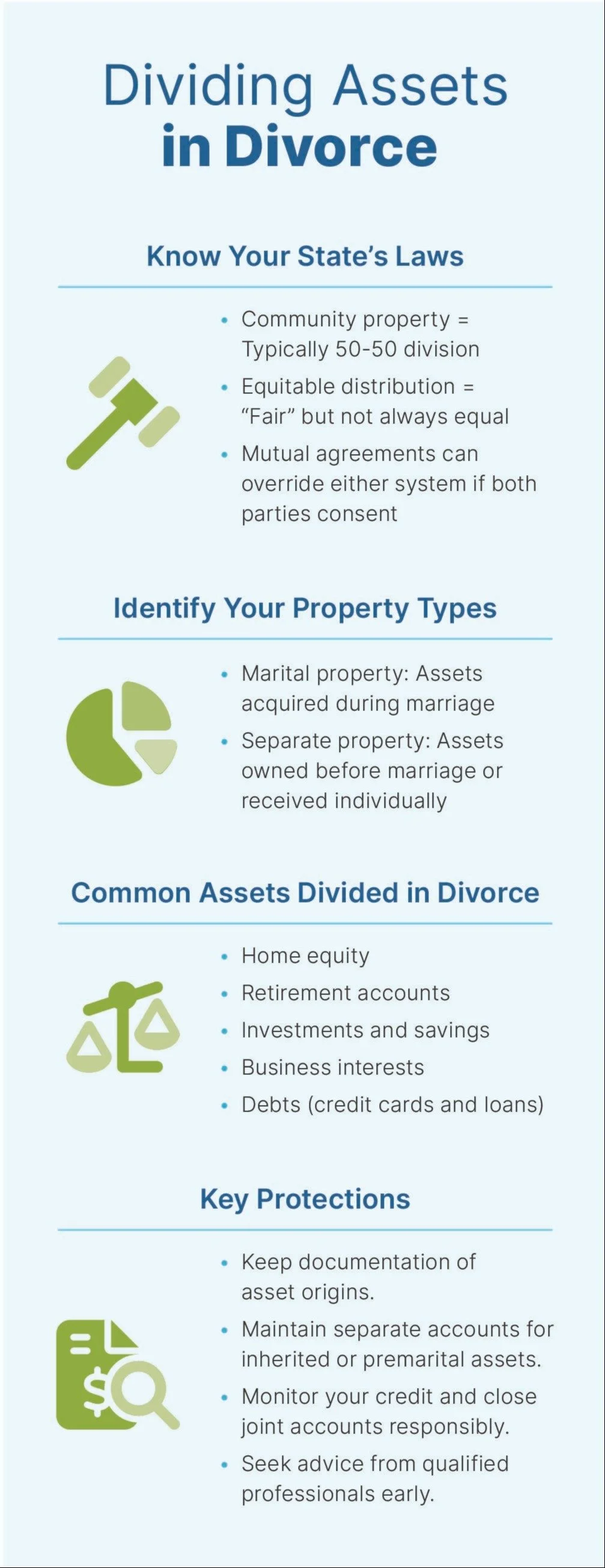
Community property states generally treat most assets acquired during marriage as equally owned and often divide them 50-50.
Equitable distribution states divide assets in a way the court considers “fair,” which may not mean equal.
These frameworks apply only to marital property, and there are exceptions and alternatives. For instance, spouses in any state can negotiate their own settlement and agree to divide assets differently—such as each person keeping what they brought into the marriage—if both sides consider the arrangement reasonable. Courts often uphold such agreements, especially when each person has had the chance to receive independent legal advice.
Marital Vs. Separate Property: What’s the Difference?
Not all assets are treated the same in divorce. In general:
Marital property includes most assets and income acquired during the marriage—homes, cars, joint savings, and retirement contributions made while married.
Separate property usually includes assets owned before marriage, inheritances, personal gifts, and some legal settlements.
The challenge comes with commingling, when separate and marital assets become mixed (e.g., depositing inherited funds into a joint account or using separate funds to improve a jointly owned home). Over time, this can blur ownership lines, and assets that began as separate may be treated as marital.
To help protect your wealth, maintain clear boundaries whenever possible: keep inherited or premarital assets in separate accounts, avoid blending them with marital funds, and retain documentation showing where the money originated.
Preparing Financially If You Anticipate Divorce (Without a Prenup)
Even without a prenuptial agreement, there are proactive, lawful steps you can take to safeguard your finances if you believe divorce may be ahead. The goal isn’t secrecy—it’s clarity, organization, and personal stability.
Take inventory of all assets and debts. List bank accounts, investment accounts, real estate, vehicles, retirement plans, and all debts. This gives you a full picture of your finances and helps ensure that nothing important is overlooked during negotiations.
Gather and secure financial documents. Copies of tax returns, account statements, mortgage records, and insurance policies provide proof of ownership and balances. Having them readily available helps prevent delays or disputes. Good documentation also helps establish whether certain assets are separate or marital, and for business owners, clear financial records support fair valuation during the divorce process.
Open individual accounts in your name only. A separate checking or savings account helps you manage personal income and gives you day-to-day financial independence. This step can also reduce the risk of joint funds being depleted without your knowledge.
Monitor and protect your credit. Reviewing your credit report helps you identify all joint accounts and take steps to prevent additional debt from being added to your name. Freezing or closing joint credit lines may be appropriate once you understand the legal and financial implications.
Update your budget and financial plan. Estimate how your income, expenses, and savings needs may change after divorce. A realistic post-divorce budget helps you make informed decisions during settlement discussions and avoid agreeing to terms that strain your long-term finances.
Each of these steps can help strengthen your financial position and gives you the information and independence needed to protect your wealth.
Working with Professionals to Safeguard Your Future
Because divorce involves legal, financial, and tax complexities, professional support can make the process smoother and more secure. Different experts can help you understand your options and make informed decisions:
Divorce attorneys interpret state-specific laws and advocate for fair settlements.
Certified Divorce Financial Analysts (CDFAs) and financial planners can project how different settlement scenarios will affect your long-term wealth, retirement goals, and cash flow.
Tax professionals can help identify ways to reduce taxes on divided assets and guide you through filing as a single individual.
That said, it’s possible to get divorced without a full professional team, especially if resources are limited or your financial situation is relatively simple. Many states allow spouses to:
File for divorce without an attorney, using court-provided forms
Use mediation services, which are often more affordable than traditional legal representation
Seek help from legal aid organizations, law school clinics, or community groups offering low-cost or free services
Handle most paperwork independently and consult a professional only for specific questions or document reviews
Even if you can’t hire a full team, a onetime consultation with an attorney can help you understand your rights and obligations under state law. Financial or tax experts can also be brought in only when needed—for example, to address a retirement account division or evaluate business assets.
Whether you use a full professional team or a more streamlined approach, the goal is to make informed choices that support your long-term financial goals.
Moving Forward with Confidence
Divorce can disrupt your sense of financial security, but it can also mark the beginning of rebuilding on your terms. By understanding how assets are classified, keeping your documentation organized, and seeking guidance when needed, you can protect what you’ve worked hard to build. The more informed and prepared you are, the more control you have over the outcome and your financial future.
FAQs About Protecting Your Assets in Divorce
-
During a divorce, assets are divided based on state laws. In equitable distribution states like Connecticut, assets are divided fairly—but not necessarily equally—based on factors such as income, contributions to the marriage, and future financial needs.
-
Marital property includes assets and income acquired during the marriage, such as homes, retirement accounts, and joint savings. Separate property typically includes assets owned before marriage, inheritances, and personal gifts—unless they become commingled with marital assets.
-
Commingling occurs when separate and marital assets are mixed together, such as depositing inherited money into a joint account. This can make it difficult to distinguish ownership and may result in separate assets being treated as marital property.
-
Key steps include creating an inventory of assets and debts, gathering financial documents, opening individual accounts, monitoring your credit, and developing a post-divorce budget. These actions help ensure financial clarity and independence.
-
No, even without a prenuptial agreement, you can take proactive steps to protect your finances. Keeping clear records, maintaining separate accounts for premarital assets, and avoiding commingling can help preserve asset ownership.
-
Working with professionals such as financial planners, Certified Divorce Financial Analysts (CDFAs), and tax advisors can help you understand the long-term impact of settlement decisions, minimize tax liabilities, and align outcomes with your financial goals.
-
Yes, many individuals handle divorce through mediation, legal aid services, or self-filing with court-provided forms. However, even a one-time consultation with a financial or legal professional can provide valuable guidance and help protect your interests.
The content is developed from sources believed to be providing accurate information. The information in this material is not intended as tax or legal advice. It may not be used for the purpose of avoiding any federal tax penalties. Please consult legal or tax professionals for specific information regarding your individual situation. This material was developed and produced by FMG Suite to provide information on a topic that may be of interest. FMG, LLC, is not affiliated with the named broker-dealer, state- or SEC-registered investment advisory firm. The opinions expressed and material provided are for general information, and should not be considered a solicitation for the purchase or sale of any security. Copyright 2026 FMG Suite.
© 2026 Commonwealth Financial Network®