
How Income Taxes Work

Taxpayers and businesses spend an estimated 7.1 billion hours a year complying with tax-filing requirements, which is worth $388 billion in economic value just to comply with tax regulations.1
As complex as the details of taxes can be, the income tax process is fairly straightforward. However, the majority of Americans would rather not spend time with the process, which explains why half hire a tax professional to assist in their annual filing.2
Remember, this material is not intended as tax or legal advice. Please consult a professional with tax or legal experience for specific information regarding your individual situation.
Getting Started
The tax process starts with income, and generally, most income received is taxable. A taxpayer’s gross income includes income from work, investments, interest, pensions, as well as other sources. The income from all these sources is added together to arrive at the taxpayer's gross income.
What’s not considered income? Gifts, inheritances, workers’ compensation benefits, welfare benefits, or cash rebates from a dealer or manufacturer.3
From gross income, adjustments are subtracted. These adjustments may include retirement plan contributions, half of self-employment, and other items.
The result is the adjusted gross income.
From adjusted gross income, deductions are subtracted. With deductions, taxpayers have two choices: the standard deduction or itemized deductions. The standard deduction amount varies based on filing status, as shown on this chart:
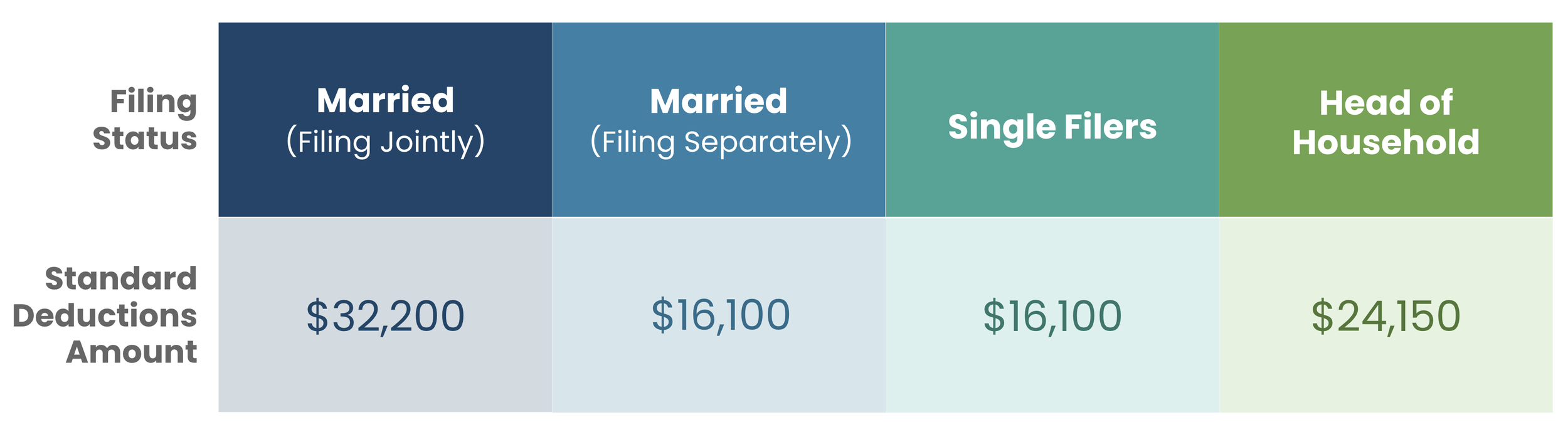
Chart Source: IRS.gov, 2025
Itemized deductions can include state and local taxes, charitable contributions, the interest on a home mortgage, and certain unreimbursed job expenses, among other things. Keep in mind that there are limits on the amount of state and local taxes that can be deducted.4
Once deductions have been subtracted, the result is taxable income. Taxable income leads to gross tax liability.
But it's not over yet.
Any tax credits are then subtracted from the gross tax liability. Taxpayers may receive credits for a variety of items, including energy-saving improvements.
The result is the taxpayer's net tax.
Understanding how the tax process works is one thing. Doing the work is quite another.
FAQs About Income Taxes
-
The income tax process begins by calculating your gross income, which includes wages, salaries, bonuses, business income, investment income, interest, dividends, pensions, and other taxable earnings.
Next, certain adjustments — such as retirement plan contributions and half of self-employment taxes — are subtracted to determine your Adjusted Gross Income (AGI).
From AGI, you subtract either the standard deduction or itemized deductions to arrive at your taxable income.
Finally, any eligible tax credits are applied to determine your total net tax owed.
-
Taxable income generally includes:
Wages and salaries
Bonuses and commissions
Business income
Interest and dividend income
Retirement distributions
Capital gains from investments
In most cases, income you receive during the year is taxable unless the IRS specifically excludes it.
-
Certain types of income are generally not considered taxable, including:
Gifts
Inheritances
Workers’ compensation benefits
Certain welfare benefits
Cash rebates from a manufacturer or dealer
However, tax laws can vary based on circumstances, so it’s important to review your specific situation with a qualified professional.
-
Adjusted Gross Income (AGI) is your total gross income minus specific IRS-approved adjustments, such as:
Traditional IRA contributions
Half of self-employment taxes
Certain health savings account (HSA) contributions
AGI is important because it determines eligibility for many deductions and tax credits. A lower AGI may increase your ability to qualify for certain tax benefits.
-
Taxpayers can choose between:
The Standard Deduction, which varies based on filing status and is typically simpler, or
Itemized Deductions, which may include:
State and local taxes (subject to limits)
Mortgage interest
Charitable contributions
Certain unreimbursed job expenses
The right choice depends on your financial situation. Many taxpayers take the standard deduction, but higher-income households or homeowners may benefit from itemizing.
-
Tax credits reduce your tax bill dollar-for-dollar, making them especially valuable.
Unlike deductions — which reduce taxable income — credits directly reduce the amount of tax you owe.
Examples may include:
Energy-efficient home improvement credits
Education-related credits
Child-related credits
Strategic planning throughout the year may help maximize available credits.
-
While many Americans hire professionals for annual tax filing, true financial optimization involves proactive tax planning, not just tax preparation.
At Atlantic Wealth Advisors in Glastonbury, Connecticut, tax efficiency is integrated into comprehensive wealth management. This may include:
Coordinating retirement contributions
Managing investment tax efficiency
Planning distributions in retirement
Evaluating charitable giving strategies
Reviewing long-term income strategies
Aligning your tax strategy with your broader financial plan can help reduce unnecessary tax burdens and support long-term financial goals.
This material is not intended as tax or legal advice. Please consult a qualified tax or legal professional regarding your specific situation.
1. TaxFoundation.org, August 27, 2025
2. IRS.gov, 2025
3. The tax code allows an individual to gift up to $19,000 per person in 2026 without triggering any gift or estate taxes. An individual can give away up to $15,000,000 without owing any federal tax. Couples can leave up to $30,000,000 without owing any federal tax. Also, keep in mind that some states may have their own estate tax regulations. This material is not intended as tax or legal advice. Please consult a professional with tax or legal experience for specific information regarding your individual situation.
4. The mortgage interest deduction is the first $750,000 of the loan for a home and the state and local income taxes deduction is capped at $40,400 for 2026.
The content is developed from sources believed to be providing accurate information. The information in this material is not intended as tax or legal advice. It may not be used for the purpose of avoiding any federal tax penalties. Please consult legal or tax professionals for specific information regarding your individual situation. This material was developed and produced by FMG Suite to provide information on a topic that may be of interest. FMG, LLC, is not affiliated with the named broker-dealer, state- or SEC-registered investment advisory firm. The opinions expressed and material provided are for general information, and should not be considered a solicitation for the purchase or sale of any security. Copyright 2026 FMG Suite.
© 2026 Commonwealth Financial Network®